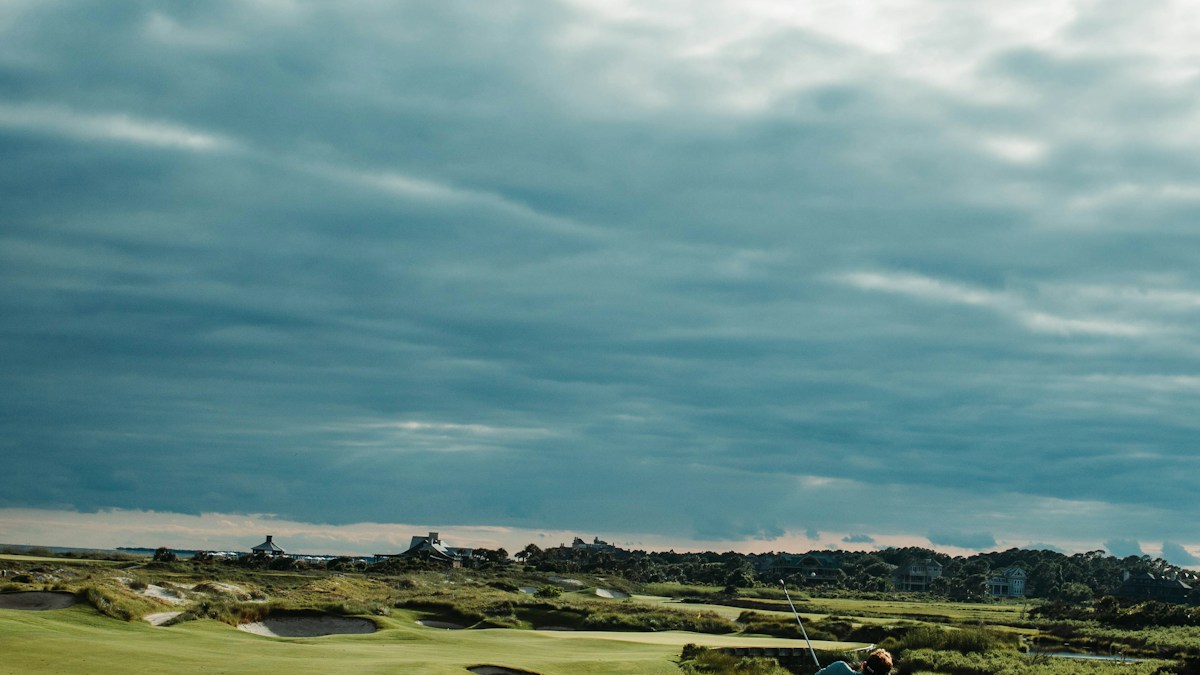

There are two ways to react when you’re handed a two-shot penalty in the opening round of a tournament. You can sulk. You can let it eat at you, blame the rules, and play the rest of the week carrying the grievance. Or you can do what Rory McIlroy did on Friday in Abu Dhabi: go out and shoot a nine-under-par 63, with 11 birdies, and put yourself right back in the mix.
I know which one I’d have done. Which is exactly why McIlroy’s 63 is worth writing about — not because 63 is a great score (it is), but because of what it says about the man.
The penalty, briefly
On Thursday, McIlroy was penalised two shots for improving his lie. It happened on the par-four 12th at Yas Links. He pressed down on the grass behind his ball with his club before hitting a chip — a breach of the rules that forbids improving the area where the ball will be struck.
The result: he finished day one on two under par, which left him eight shots behind the Italian leader, and he had to go out on Friday with the penalty sitting there, unremoved, on his scorecard.
Then came the 63
McIlroy didn’t just make birdies — he made a statement. He began his second round with a bogey at the first, which is the kind of start that can unravel a player who’s already feeling aggrieved. Not Rory. He picked up shots at the second, fourth and seventh holes, and then went into full destroyer mode: five consecutive birdies from holes nine to 13.
Eleven birdies in a round. On a course where the leaderboard was stacked. That took him to 11 under par for the tournament and gave him the clubhouse lead with several of the leading players still out on the course.
Let me put that in perspective. He was eight back after day one. After day two, he’s at the top of the leaderboard. That’s a 10-shot swing, and it came against a field that includes the kind of names who don’t usually hand back a lead.
Why this matters more than the score
The back-to-back Masters champion has been in imperious form over the last year or so. But the thing that separates the greats from the very good is how they handle adversity. A two-shot penalty, handed out for a technical breach, is the kind of thing that gets into a golfer’s head. You replay the shot. You think about what you did wrong. You wonder if the officials got it right.
McIlroy did none of that. He got on with it. And that, honestly, is the more impressive part than the 63 itself.
There’s a psychological skill in being able to compartmentalise. Put the penalty in a box, close the lid, and go play golf. Not everyone can do it. The ones who can — McIlroy is one of them — tend to be the ones who win majors.
The Abu Dhabi picture
Yas Links is a course that rewards aggression off the tee and precision into the greens. McIlroy’s length is a genuine weapon there, and when his putter behaves — 11 birdies suggests it was behaving — he’s a different proposition entirely.
The question for the weekend is whether he can carry this form through. The clubhouse lead is one thing; holding off a chasing pack over 36 holes is another. But if Friday’s 63 is a sign that the penalty is truly behind him, then he’s got to be the favourite from here.
My honest read
I’ll be blunt: I didn’t love the penalty. Improving your lie by pressing grass down is a fine line — lots of players do it without thinking, and the modern rules are strict about it. But rules are rules, and McIlroy’s response was flawless.
There’s something almost admirable about a player who can take an injustice on the chin and answer with the best round of his week. That’s not just talent. That’s temperament. And it’s the reason I keep coming back to the idea that McIlroy, at this stage of his career, is playing the best, most mature golf of his life.
The scorecard will say 63. The story is the two-shot penalty he left behind. For anyone who wants to learn how to handle a setback in sport — or in anything, really — McIlroy’s Abu Dhabi Friday is a masterclass.
What to watch this weekend
Keep an eye on the leaderboard. If McIlroy converts this into a win, it’ll be one of the more satisfying victories of his season — the kind that tells you his head is exactly where it needs to be. And if he stumbles? The penalty narrative will resurface. But from where I’m sitting, a man who shoots 63 the day after a two-shot penalty is not a man who’s going to let the weekend slip.
This is a great golf tournament, and it just got a whole lot more interesting.
The rule that caught him, explained
Let me be precise about the penalty, because it’s the kind of rule that confuses even seasoned golf fans. Rule 8.1 of the Rules of Golf is about “improving the area of intended swing.” You’re not allowed to press down on the ground behind your ball to improve the lie — even a tiny bit, even accidentally.
McIlroy, on the par-four 12th at Yas Links, was in the rough or a tricky lie. Before hitting a chip, he pressed down on the grass behind his ball with his club. It’s a natural, almost instinctive thing many golfers do — but the rules don’t care about intent. The act itself is the breach.
That’s why the two-shot penalty stood. It wasn’t malicious. It wasn’t cheating. It was a technical breach, caught by the rules, and the penalty had to be applied. McIlroy accepted it without complaint — which, to me, is a sign of his maturity.
Yas Links and the test it poses
Abu Dhabi’s Yas Links is a genuinely demanding course. It’s a links-style layout — coastal, windy, with firm greens and punishing rough. It rewards players who can control their ball flight and manage their game. It punishes players who try to force shots that aren’t there.
McIlroy’s length is an obvious asset here. But the course is more than just long. The wind off the water can turn a routine par into a battle. The greens are fast and subtle. It’s the kind of course where a player’s temperament gets tested as much as their technique.
Which is exactly why McIlroy’s 63 is so impressive. He didn’t just bomb it off the tee and make putts. He managed the course — picked his spots, played smart golf, and took advantage when the holes presented chances. Eleven birdies tells you he was aggressive, but the bogey at the first tells you he didn’t let a bad start derail him.
What this means for the rest of the tournament
McIlroy has the clubhouse lead. But the tournament is far from over. The field in Abu Dhabi is strong, and there are players with the talent to chase him down.
The key question is how McIlroy handles the pressure of being the front-runner. He’s done it plenty of times before — he’s a back-to-back Masters champion, after all — but each tournament is its own challenge. The two-shot penalty is behind him, but the psychological residue can linger.
From what I saw on Friday, there’s no residue. He looked calm, focused, and in control. The 63 was the product of a player who has completely compartmentalised the penalty and is just playing golf.
The bigger picture of McIlroy’s season
This is a pivotal year for McIlroy. The back-to-back Masters wins solidified his place as the best player of his generation. But the season is long, and consistency matters as much as majors.
A win in Abu Dhabi would be a strong statement. It would show that the form that won him the Masters isn’t fading, and that he can win in different conditions, on different courses, against different fields. That’s the mark of a true great — winning everywhere, not just on courses that suit your game.
And there’s the Ryder Cup angle. McIlroy is the heartbeat of the European team. Every strong performance in a European event is a reminder of how dangerous he is in a match-play setting. A confident McIlroy heading into the next Ryder Cup is a worrying prospect for the Americans.
What I’d say to a golfer who’s just been penalised
There’s a lesson here for every golfer, not just the professionals. When you get penalised — whether it’s two shots or a drop out of bounds — the temptation is to let it affect your next shot, your next hole, your whole round.
McIlroy didn’t do that. He acknowledged the penalty, accepted it, and moved on. That’s a skill. And it’s a skill you can learn.
The next time you hit a bad shot or get a bad break, remember Abu Dhabi. Remember that the best players in the world don’t let a single setback define their round. They compartmentalise, reset, and keep playing.
The weekend ahead
I’m going to be glued to the leaderboard. McIlroy at 11 under with a chance to win is appointment viewing, especially after the drama of the penalty. Whether he converts it or not, the story of this week is already written: a two-shot penalty, answered by a 63.
That’s the kind of resilience that separates the greats from the very good. And it’s why I’m confident McIlroy is going to be a force in this tournament — and for the rest of the season.
Watch this space.