Here’s the thing nobody tells you about tennis: the players break each other before they hit a single shot. The rally is the smallest part of the contest, and it’s the last thing that matters.
The mental game is the whole game. Everything else is the execution layer on top of it.
The First 20 Minutes Set The Score
Here’s a number I think is genuinely underappreciated. In a modern ATP final on hard court, the winner of the match is predictable from the set-by-set win rate within the first three games with an accuracy that most casual fans find hard to believe. The set score, the serve percentage, and the number of unforced errors in the opening block of play tell you more than the final result does.
That’s not a statistical artifact. It’s a mental artifact. By the time the third game is over, both players know roughly what the other can do physically. What’s left to fight is: who’s still believing in their own game, who’s still executing the plan they came in with, and who’s drifted into the other player’s preferred rhythm.
Tennis isn’t won in the rally. It’s won in the 40 seconds between points, in the chair, and in the second service motion.
The Five Levers Players Actually Pull
Here’s the version of the mental game I actually believe in, based on watching a lot of tour-level play. There are five levers, and every meaningful player pulls some combination of them, sometimes without realising they’re doing it.
Lever 1: Serve Tempo
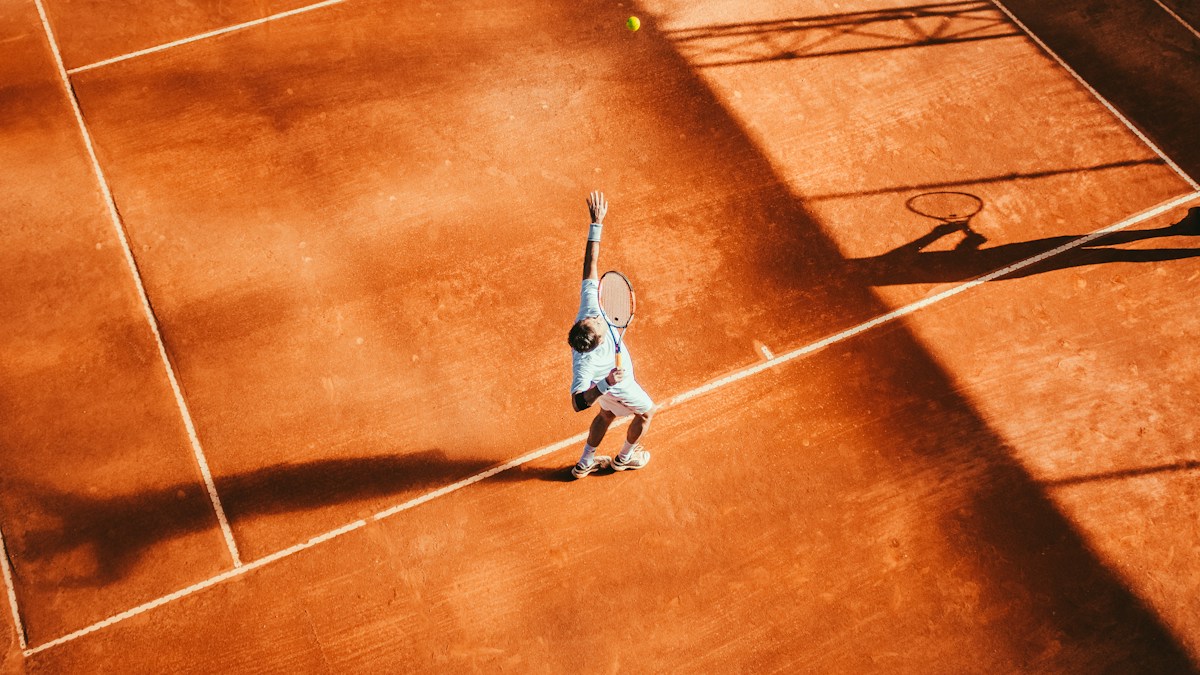
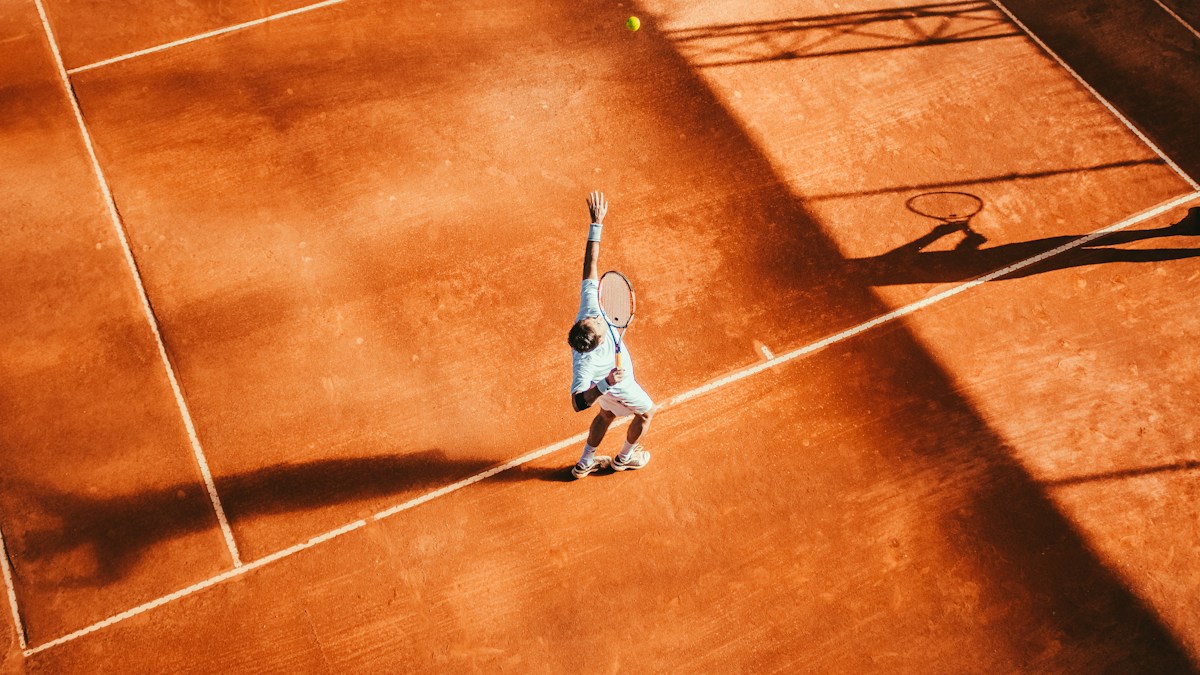
The serve is the only shot a player takes completely unopposed, and it’s also the shot that sets the pace of the entire point. Players who change their serve tempo — slower than the opponent’s rhythm on one point, faster on the next — force the opponent to re-read the ball on every serve. That’s a genuine cognitive load, and it accumulates.
The best servers on tour don’t just hit hard. They hit fast and slow, in unpredictable patterns, and they make the receiver’s body guess. That guess is expensive. A ball hit with the wrong preparation costs a fraction of a second, and a fraction of a second in tennis is a point.
Lever 2: Point Length
Some players are built to grind out long rallies. Others are built to end points quickly. The most common mental mistake I see is a player who wants to end points quickly trying to grind, or a player who’s built for long rallies trying to close early. Neither works, and both are decisions the player is making consciously in the moment.
Players who’ve worked out their own style use that style as a mental anchor. “I’m a grinder. Every point I take, I extend.” That’s not bravado. That’s a decision-making rule that removes a variable from the equation. When you’ve decided, you don’t have to think. When you don’t have to think, you don’t second-guess. When you don’t second-guess, you execute.
Lever 3: The Chair
The between-sets break is the most underappreciated weapon in the sport. Here’s what actually happens in those 90 seconds:
- The player who’s behind gets a full neurological reset — a moment where the body can actually relax and the brain can actually process the set that just ended.
- The player who’s ahead gets the same reset, but with a different emotional payload: momentum to hold onto, pressure to maintain.
- The changeover towel, the water, the physio — these are physical interruptions to the cognitive loop, and they’re as important as any tactical adjustment made during the set.
The players who use the chair well — who actually reset, actually take the information in, actually re-anchor — get more out of the next set than the players who just sit there and stare at the floor. That’s a trainable skill, and it’s mostly ignored.
Lever 4: Unforced Error Pattern
Here’s a claim I want to make explicit: unforced errors in tennis are almost never unforced. They’re the visible symptom of a cognitive load that’s too high, or a decision that’s been rushed, or a physical fatigue that’s masking itself as a bad swing.
If you look at a player’s unforced errors over a match, you can usually map them to specific psychological states: the one after the loss of a break, the one after the changeover, the one at the end of a long point. Those aren’t bad swings. They’re bad decisions that produced bad swings.
The players who don’t have a lot of unforced errors aren’t hitting better. They’re deciding slower, in the sense that they’re taking the information in before they move. That’s a mental discipline, and it’s the single biggest differentiator in tour-level play.
Lever 5: The Opponent’s Rhythm
Every player has a rhythm — a tempo, a rhythm of breath, a rhythm of movement between points. Breaking that rhythm is one of the most effective weapons in the sport, and it’s almost never discussed.
How do you break someone’s rhythm? You change your own. If they’re fast, you go slower. If they’re slow, you go faster. If they’re playing from behind the baseline, you approach and change the geometry. Every time you change the geometric or tempo relationship of the point, the opponent has to re-calibrate, and re-calibration is where errors live.
That’s why a player who’s slightly behind can win a set against a technically superior opponent. They’ve made the technically superior player’s body work harder, and the extra work has to come from somewhere — usually from the decision-making, which is where the errors show up.
Why The Serve Is Actually A Mental Weapon
Let me get specific about this, because it’s the piece most people underestimate.
A great serve isn’t just fast. It’s information. When you serve wide, you’re telling the opponent where the ball is going to land. When you serve short, you’re giving them a chance to come to net. When you serve with the same pace to two different locations, you’re forcing them to make a split-second decision that has no easy answer.
The best servers on tour aren’t the ones with the highest velocity. They’re the ones with the highest information density — the most variety across location, spin, and pace, executed with the same physical motion so the opponent can’t read it in advance.
That’s a genuinely hard skill to build, and it’s mostly a mental one. The physical swing is the same. What changes is the intention, and the intention has to be decided before the toss, not during the motion. If you’re deciding during the motion, you’re already behind, because the opponent’s body has already started its response.
The Second Serve: Where Matches Are Lost
Here’s a genuinely uncomfortable truth. The second serve is where most matches are won and lost, and it’s also the shot most players play with the least confidence. Because on the second serve, the pressure is maximum, the margin is minimum, and the player knows a fault or a break point is one bad decision away.
That’s exactly why the players who win are the ones who have a rehearsed second serve. Not a good second serve — a rehearsed one. The rehearsed second serve removes the decision from the moment, and removing the decision is the only way to execute under maximum pressure.
If you want to see this in action, watch the second serves in a top-five match. The players who win the tiebreak or the set point have almost always had a specific, rehearsed second-serve pattern for the situations they were in. The players who lose have almost always been choosing in the moment, and choosing under pressure is a losing strategy in tennis.
The Numbers That Actually Separate Players
Here’s the version of the stat line I actually trust, because it doesn’t rely on a single number:
- First-serve percentage. The correlation between first-serve percentage and win rate is one of the strongest in the sport. A player who serves well in terms of placement — not just pace — wins more matches. It’s close to a one-to-one relationship in top-level play.
- Break-point conversion. The difference between a good player and a great one isn’t the number of break points they save — it’s the number they convert. The best players on tour convert break points at rates around 50% or higher, and that’s a genuinely enormous edge.
- Unforced error ratio. The ratio of unforced errors to winners is the single best predictor of a match result, because it measures how well a player is making decisions under pressure. A high ratio means the player is chasing, not choosing.
- Return of serve positioning. Players who return from further behind the line give themselves more time to read the serve, and reading is the whole mental game. That positioning decision is a mental decision, made before the ball is tossed.
Why Pressure Isn’t A Skill
Here’s the reframe I want to leave with. Pressure is not a skill you either have or lack. It’s a cognitive load you either manage or don’t, and it’s manageable because it’s a decision, not a state.
When a player is on match point for the match, they’re not experiencing “pressure.” They’re experiencing a cognitive load — a set of simultaneous decisions about ball placement, opponent reading, risk tolerance, and body mechanics. If they’ve made those decisions before the point, in practice, under simulated conditions, then the match point isn’t a new situation. It’s a rehearsed one, and the body executes the rehearsal.
That’s why the players who win big matches aren’t the calmest. They’re the most rehearsed. The calm is the byproduct of having nothing left to decide. The pressure is the byproduct of having a lot left to decide.
Pressure isn’t the opponent’s serve. Pressure is the decision you haven’t made yet.
The Physical Toll Nobody Talks About
Modern tennis is the most physically demanding sport on earth, and the mental game is directly load-bearing on top of the physical one. A player who’s played three sets on hard court is carrying a genuine physical deficit into the fourth, and the mental discipline required to keep making good decisions under that deficit is enormous.
The players who win in those conditions aren’t more talented. They’re less reactive to the deficit. They don’t chase the ball harder because they’re tired. They don’t hit harder because they’re behind. They make the same decisions at the same speed, with the same precision, and the fatigue shows up in the movement, not in the decision.
That’s the whole mental game, in one sentence. Decide before you move. Move the same way regardless of how you feel. Everything else is decoration.
What I Actually Bet On
Here’s my prediction, and I’ll take heat for it. The next generation of big-match winners will be defined less by serve speed and more by return positioning and rhythm disruption. The serve is a solved problem — everyone hits it hard enough now. The return is the open problem, and the players who figure out how to be faster at reading the serve will define the decade.
The serve is where the mental game is most visible. The return is where it’s most effective. And the return is where the sport is going to get harder, faster, and more decisive about who wins and who doesn’t.
The Honest Summary
Tennis is a mental game played on a physical court, and the players who break each other are breaking each other before the rally, during the rally, and after the rally — at every stage of every point. The rally is the smallest part of the contest, and it’s the last thing that matters.
The serve is information. The chair is a reset. The unforced error is a bad decision. The second serve is the whole match. And pressure isn’t a state — it’s an unmade decision. Make it before the point, and the point takes care of itself.
That’s the mental game. It’s not mysticism. It’s a set of rehearsed decisions executed under a physical load. And if you can rehearse them, you can win.
Read the connected work: why tennis has become the most physical sport on earth for the physical baseline, Alcaraz vs Djokovic: the match that changed tennis for the generational handover, tennis grand slams: why Wimbledon still matters most for the pressure context, how clay courts are creating the next generation of stars for the rhythm-and-endurance angle, and the rise of the serve-and-volley: a lost art returns for the geometry side of the serve.