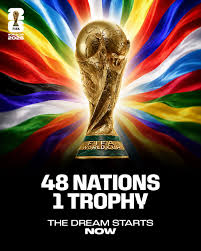

FIFA president Gianni Infantino is facing the gravest crisis of his decade in charge. A senior adviser has resigned in protest, three confederations — covering 136 of FIFA’s 211 member nations — have rejected his plan to sell a stake in the World Cup to private investors, and even his own allies are asking whether he can survive.
The Bombshell: UEFA’s Boycott Threat
The crisis has unfolded in barely 72 hours. On Tuesday 28 July, Infantino announced the plan in a letter to all 211 member associations — offering each $40m with a 19 September deadline and the first $20m payable on 1 January. In a video he called it “an offer, not an obligation… a golden opportunity to turbocharge the development of the game globally.” Then, at 16:00 BST on Thursday 30 July, European football’s governing body released a statement that sent shockwaves through the sport:
“Uefa and its national associations will not participate in Fifa competitions.”
UEFA’s 55 members voted unanimously, adding: “No one has the moral authority to sell what they merely hold in trust for the next generation… The World Cup is not for sale.”
UEFA’s 55 members voted unanimously, adding: “No one has the moral authority to sell what they merely hold in trust for the next generation… The World Cup is not for sale.”
Eleven words. That was UEFA’s definitive reaction to Infantino’s plan to sell up to a 20% stake in a new $20bn commercial subsidiary, FIFA Forward Enterprise (FFE), set up to run FIFA’s competitions — including the World Cup itself. FIFA hopes to raise $4.2bn from private investors, led by Thrive Eternal, the investment fund of Joshua Kushner — brother of Donald Trump’s son-in-law Jared Kushner.
Sources described the mood at UEFA’s emergency meeting as pure “anger” — fury not just at the proposal, but at the lack of consultation and dialogue from Infantino, including with his own FIFA colleagues.
Senior Adviser Resigns: ‘A Bad Deal for Football’
Hours after the Asian Football Confederation (AFC) declared its opposition, Carlos Cordeiro, 70 — Infantino’s senior adviser on global strategy and governance, a former US Soccer president and ex-vice chairman of Goldman Sachs — resigned with immediate effect on Friday 31 July, calling the proposal:
“A bad deal for football” that would “mortgage football’s future.”
Cordeiro is the first senior figure at FIFA to resign over the plans. He had served as senior adviser for four years and 11 months, represented FIFA on the White House taskforce for the 2026 World Cup, and is a former Goldman Sachs investment banker. Appointed in September 2021, he said he “unequivocally” opposed the plans and did not accept the proposition that FIFA needed outside investors to “unlock greater value”.
“The proposal has become a defining question for Fifa’s future,” he wrote. “Why this deal? Why now? What oversight exists? Who benefits?” He noted FIFA has “billions of dollars in reserves and no debt” after $15bn in revenue across the 2022-26 cycle, asking why the game’s crown jewels need selling at all.
Three Confederations Revolt: The Vote Math That Dooms the Plan
Infantino had indicated the proposals would need a straight majority — 106 of FIFA’s 211 members — to pass. Here is why that now looks impossible:
- UEFA (Europe): 55 votes — threatens to boycott all FIFA competitions if the plan goes through
- CONCACAF (North & Central America, Caribbean): 35 votes — its 41 members rejected the proposals citing “deep concerns about the lack of due process” and an “artificially short deadline”; sources say most have “lost faith” in Infantino’s ability to govern
- AFC (Asia): 46 votes — “stands in solidarity” with Europe and the Americas
That is 136 nations against the plan — comfortably more than the 106 needed to block it. If it ever went to a vote, the proposal would be dead.
What the Confederations Said
The AFC’s statement was scathing, accusing FIFA of setting the “direction of travel” for a “significant initiative” before consulting stakeholders, and exposing “fundamental weaknesses in Fifa’s consultation and decision-making processes”. It criticised FIFA for leaving “confederations, member associations and even Fifa’s own governing bodies, including the Fifa Council, feeling sidelined”.
“The Fifa World Cup, and the game itself, belong to the entire global football family,” the AFC added. “Their future must always be shaped collectively.”
UEFA vice-president and ex-Wales international Laura McAllister went further, accusing FIFA of “blackmail” over the plan: “Nobody can even countenance the thought of not being involved in those [World Cup play-offs]. But let’s be clear here. This is not a problem of Uefa’s making. It’s a problem that Fifa have created. We’ve been pushed into this corner and that’s Fifa’s responsibility.”
The Numbers Behind the Fury
- $40bn (£30bn): the value Infantino promised member nations the FIFA competitions “product” could generate, in a letter to national associations
- $20m (£15m): the cash payment each nation would bank on 1 January if they accepted the deal
- 19 September: the deadline for countries to accept FIFA’s offer
- 20%: the stake in FIFA’s commercial subsidiary being offered to private investors, including Joshua Kushner
The timing is what makes the threat so tangible. The U20 Women’s World Cup begins in Poland on 5 September — in theory, countries could be pulling out of that tournament mid-quarter-final. Then come the Women’s World Cup play-offs in October, which feature England, Scotland, Wales and Northern Ireland — a first-ever World Cup qualification for Wales is on the line.
‘The Wrong Man to Lead the Organisation’
The political pressure is building across Europe. UK Prime Minister Andy Burnham delivered the most direct verdict yet, telling reporters:
“This was an outrageous suggestion. The idea that it could even be brought forward shows that, in my view, [he] is the wrong man to lead the organisation.”
Culture Secretary Lisa Nandy said “football belongs to the fans, not billionaire investors”, while La Liga president Javier Tebas accused Infantino of running “an electoral campaign financed with the future of football… He is the problem.” Even disgraced former president Sepp Blatter weighed in: “No-one has the right to sell our game.” Fifpro, the World Leagues Association and European Leagues all registered opposition.
Culture Secretary Lisa Nandy said “football belongs to the fans, not billionaire investors”, while La Liga president Javier Tebas accused Infantino of running “an electoral campaign financed with the future of football… He is the problem.” Even disgraced former president Sepp Blatter weighed in: “No-one has the right to sell our game.” Fifpro, the World Leagues Association and European Leagues all registered their opposition.
Football Association chair Debbie Hewitt — herself a FIFA vice-president — spoke out against the plan at UEFA’s emergency meeting, with the FA saying it stands “shoulder to shoulder with our European colleagues”. Council members have told reporters they were kept in the dark and feel “duped” into a “fait accompli”. The Scottish FA, whose president Mike Mulraney chairs FIFA’s finance committee, said it “agrees unequivocally” with UEFA’s stance.
Can Infantino Survive?
The stakes could not be higher. Infantino, in power since 2016 when he beat Sheikh Salman al-Khalifa by 115 votes to 88, is due to stand for a fourth term in March. Before this week, it was anticipated he would be re-elected unopposed. That assumption has now evaporated.
There is talk of finding a challenger, with Nasser Al-Khelaifi — the PSG president and chairman of European Football Clubs, whose organisation boasts more than 800 members — the name most mentioned. But sources close to the Qatari say he “genuinely, genuinely, genuinely doesn’t want the job”.
History offers little comfort to Infantino’s critics: the last FIFA president to lose an election was Sir Stanley Rous in 1974, beaten by Joao Havelange. Sitting presidents are rarely challenged, let alone defeated.
Former FA chairman David Bernstein summed up the paradox: “In a normal organisation, if he has to back down due to something of this magnitude he’d probably be shown the door. But Fifa is not a normal organisation. If he has the support of enough of the national associations, he will continue.”
Bernstein was blunt about the deal itself: “On this occasion, Infantino’s got to back down. This deal is not acceptable. It’s a friends deal and it’s not right. If they want to raise capital, there’s other, better ways of doing it.”
FIFA’s Response: ‘Nobody Is Selling Football’
FIFA has pushed back, releasing a statement claiming consultation over the proposals “was disrupted by incorrect media reports” and reaffirming its commitment to “an open and democratic consultation”.
“Nobody is selling football. This is not something Fifa would ever entertain.”
But the resignations, the revolts and the vote arithmetic tell a different story. Former UEFA chief executive Lars-Christer Olsson said Infantino had overplayed his hand, and suggested the presidency should rotate between confederations “rather than giving people so much power”. Asked whether Infantino should be removed, his answer was stark:
“I think that should be a new start for football.”
What Happens Next
- September 5: U20 Women’s World Cup begins in Poland — could European nations withdraw mid-tournament?
- September 19: deadline for nations to accept FIFA’s $40m deal (first $20m payable January 1)
- Late October 2026: first investor cash targeted to land
- October: Women’s World Cup play-offs featuring England, Scotland, Wales and Northern Ireland
- March 2027: FIFA presidential election — Infantino’s fourth-term bid now faces genuine uncertainty
The flashpoints keep multiplying: the revamped Club World Cup, which FFE would run, drew empty stadiums in 2025 — its trophy memorably engraved “Inspired by… Infantino” — and any boycott would gut it. The controversial dual allocation of the 2030 (six nations) and 2034 (Saudi Arabia) World Cups, decided without consultation, is cited by the AFC as proof of a broken governance culture. UEFA remains adamant it does not want a permanent split — “it would be a lose-lose for everybody”, in Bernstein’s words, since FIFA cannot afford to exclude Europe and Europe cannot afford to be excluded. But with three confederations in open revolt, a senior adviser gone, and political leaders calling for his head, Gianni Infantino enters the most dangerous chapter of his FIFA presidency.
The question is no longer whether the plan survives. It is whether Infantino himself does.