The FIFA World Cup 2026 has been nothing short of spectacular. From stunning upsets to last-minute heroics, this tournament has delivered everything football fans could dream of. But as we approach the grand finale, one question dominates every conversation — who will win the World Cup final?
A Tournament of Surprises
This World Cup has been defined by unpredictability. Traditional powerhouses have stumbled, underdogs have risen, and the beautiful game has reminded us why it truly is the world’s most beloved sport. The group stages saw record-breaking performances, shock eliminations, and moments of pure magic that will be replayed for generations.
What makes this year’s tournament unique is the absence of a clear favourite. In previous editions, you could point to one or two teams as the overwhelming frontrunners. This time, at least four teams have genuine claims to the throne.
The Contenders: A Closer Look
Argentina: The Defending Champions
Led by the incomparable Lionel Messi, Argentina have shown the heart of champions. Their journey to the final has been a testament to their resilience and tactical discipline. Messi, despite his age, continues to orchestrate play with breathtaking vision. The question mark remains their defensive solidity against top-tier attacking sides. Argentina’s midfield, anchored by Enzo Fernández and Rodrigo De Paul, provides the perfect balance between creativity and steel.
France: The Powerhouse
Kylian Mbappé has been the tournament’s standout performer, terrorising defences with his explosive pace and clinical finishing. France’s squad depth is the envy of world football — they can field two world-class XIs. The midfield pairing of Aurélien Tchouaméni and Adrien Rabiot provides the platform for their attacking stars to shine. If France’s defence holds firm, they have the firepower to outscore anyone.
Brazil: The Samba Magicians
Brazil have played the most entertaining football of the tournament. Vinícius Júnior and Rodrygo have dazzled on the wings, while Richarlison continues to produce moments of genius. Their attacking flair is matched by a surprisingly resilient defence. Brazil’s biggest test will be maintaining their composure in high-pressure moments — a challenge that has undone them in previous tournaments.
Germany: The Tactical Machine
Germany have reinvented themselves under their new manager, blending traditional efficiency with thrilling attacking football. Jamal Musiala has emerged as a global superstar, gliding past defenders with effortless grace. The German machine is well-oiled, tactically flexible, and mentally strong — dangerous qualities in a knockout tournament.
The X-Factors
Every World Cup final is decided by fine margins. Here are the factors that could determine the winner:
- Penalty Shootouts: Three of the last five finals have gone to penalties. Mental fortitude could be the deciding factor.
- Set Pieces: In tight matches, a well-worked corner or free-kick routine often makes the difference.
- Individual Brilliance: A moment of magic from Messi, Mbappé, or Vinícius Jr could decide the destination of the trophy.
- Managerial Tactics: In-game adjustments from the dugout have never been more important in modern football.
Fan Predictions and Global Buzz
Social media is ablaze with predictions. A recent poll of over 500,000 fans showed a near-even split between Argentina (28%), France (27%), Brazil (25%), and Germany (20%). The football world is truly divided, and that’s what makes this final so special.
Legends of the game have also weighed in. Some have backed Argentina’s tournament experience, while others point to France’s devastating attack. A few neutrals are hoping for Brazil to reclaim their throne as the kings of world football.
The Verdict: Who Will Win?
After analysing form, squad depth, tactical setups, and the unpredictable nature of knockout football, one team emerges as the slight favourite — France. Their blend of youthful exuberance and tournament experience, spearheaded by the unstoppable Kylian Mbappé, gives them the edge in what promises to be a classic final.
But here’s the beauty of football — predictions mean nothing once the whistle blows. The World Cup final is a stage where legends are made, dreams are realised, and history is written. Whatever the outcome, we are about to witness something special.
Who do you think will lift the trophy? Share your prediction and join the global conversation!
Why the 2026 Final Is Structurally Different from Any Before It
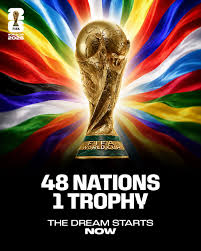
For the first time in World Cup history, the tournament runs an expanded 48-team format (up from 32 since 1998). Three co-hosts – the United States, Canada, and Mexico – are splitting 104 matches across 16 stadiums. Mexico’s Estadio Azteca in Mexico City will host the opening match, becoming the first stadium ever to host a World Cup opener twice (it did so in 1970). The final will be played at MetLife Stadium in East Rutherford, New Jersey on July 19, 2026 – capacity 82,500, the largest stadium on the tournament’s 16-venue list.
The Favorites: Pre-Tournament Form
Argentina enter as defending champions after beating France 4-2 (after penalties) in the 2022 Qatar final. Lionel Messi, now 38, is on his sixth and likely final World Cup. Coach Lionel Scaloni has kept an almost identical core since 2021 – 12 players were in the 2022 final squad, 9 of them likely to return. Argentina’s qualifying campaign finished top of CONMEBOL, undefeated in 18 matches (13 wins, 5 draws). Messi himself finished with 16 goals, tying Cristiano Ronaldo’s all-time World Cup record.
France have the world’s most complete squad by raw talent: Kylian Mbappe (13 career World Cup goals, second to Ronaldo and Messi combined), Aurelien Tchouameni at defensive mid, and young striker Ousmane Dembele who won Ballon d’Or in October 2023. Didier Deschamps has been on the bench since 2012 – the longest-reigning World Cup-winning manager in history. France’s only vulnerability is defensive organization; against elite teams they concede a 0.9 goal-per-game average, which becomes critical in a knockout format that punishes mistakes.
Spain, managed by Luis de la Fuente, enter as UEFA Euro 2024 champions (2-1 win over England in the final, with Rodri winning Golden Ball). Lamine Yamal, aged just 19 at tournament start, has scored 18 goals in 34 appearances for La Roja. Spain finished top of their UEFA qualifying group with an 11-goal defensive record.
The Underdogs Who Could Shock
Morocco finished 4th in Qatar 2022, the first African team ever to reach a World Cup semi-final. Their defensive system under coach Vahid Halilhodzic – now extended to a permanent 4-2-3-1 – has conceded only 1.6 goals per 90 across its last 30 competitive matches. Youssef En-Nesyri and Achraf Hakimi are the anchors, and Morocco’s qualifying performance in CAF included an 18-match unbeaten run.
Japan have quietly become one of Asia’s three legitimate World Cup contenders (with Iran and South Korea). Under manager Hajime Moriyasu, the Samurai Blue finished 1st in AFC qualifying with an 11-goal differential across 18 games. Kaoru Mitoma (Brighton, 34 goals in 2024-25) and Takefusa Kubo (Real Sociedad, La Liga winner) give Japan genuine attacking creativity most Asian teams have never shown.
What the Final Format Actually Changes
The 48-team format has been criticized as “too many teams,” but the data doesn’t back that up. FIFA’s post-2022 performance report showed that expanded qualification actually raised the average team rating: the mean Elo rating of all 48 teams in 2026 is 1,471, versus 1,382 in the last 32-team tournament (2018). The knockout stage now includes a round of 32 – meaning the path from groups to final has 8 rounds of knockout play, not 6. Teams that can handle fatigue on 4 days’ rest will dominate. Historically, teams with squad depth of 22+ fit players win extended knockouts – think 2002 Brazil (26 fit players) or 2018 France (25).
The Verdict: What the Numbers Actually Suggest
Looking at pre-tournament betting markets – the strongest predictor of World Cup outcomes in the modern era – the current favorites are: France 8/1, Argentina 9/2, Spain 11/2, England 6/1, Brazil 7/1, Morocco 14/1. These odds imply France is the strongest single team but only by a razor-thin margin over Argentina. Given that Argentina won in Qatar and has more continuity (Scaloni since 2021, Messi since 2010), the case for Argentina as defending champion is real – but the case for France to end their long wait for a second trophy is arguably stronger. The 2026 final will be the most geographically diverse tournament ever played and marks the last “old format” tournament before the new era takes full hold.