The 2026 FIFA World Cup is in the books. Spain made history in New Jersey. But football never sleeps — and neither does FIFA. Here’s what’s coming next for the beautiful game.
The 2026 World Cup in Numbers
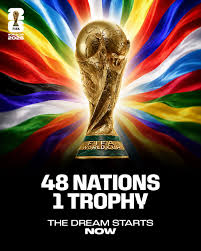
Before looking ahead, it’s worth taking stock of what the 2026 FIFA World Cup delivered. The tournament — the first to feature 48 teams and the first to be jointly hosted by three nations (the United States, Mexico, and Canada) — was a record-breaking spectacle from start to finish.
- 104 matches played across 16 venues in 16 cities
- 308 goals scored — an average of 2.96 per match, the highest since 1970
- 6,810,966 total spectators — a new all-time World Cup attendance record
- $871 million in total prize money distributed — nearly double the 2022 figure
Spain lifted the trophy for only the second time in their history — and in doing so became the first nation to simultaneously hold both the men’s and women’s World Cup titles, having won the 2023 Women’s World Cup. Their achievement is all the more remarkable given that they conceded just one goal across the entire tournament, the fewest by any World Cup-winning side in the modern era.
Awards and Standouts
The individual honours told the story of the tournament:
- Golden Ball (Best Player): Rodri (Spain) — The midfield maestro orchestrated Spain’s campaign with the same composure that won him the 2024 Ballon d’Or
- Golden Boot (Top Scorer): Kylian Mbappé (France) — 10 goals made him the first player to win back-to-back World Cup Golden Boots and cemented his status as the all-time leading World Cup goalscorer
- Silver Boot: Lionel Messi (Argentina) — 8 goals in what was almost certainly his final World Cup
- Bronze Boot: Jude Bellingham (England) — 7 goals as England finished third
- Golden Glove (Best Goalkeeper): Unai Simón (Spain)
- Best Young Player: Pau Cubarsí (Spain)
- Fair Play Award: Netherlands
The Final: Spain 1-0 Argentina (After Extra Time)
The final at MetLife Stadium in East Rutherford, New Jersey, in front of 80,663 spectators, was a tense, dramatic affair. The match looked destined for a penalty shootout until Ferran Torres struck in the 118th minute, meeting a Nico Williams header with a left-footed finish that sealed Spain’s triumph.
Argentina had their moments — goalkeeper Emiliano Martínez pulled off a record 11 saves in the match — but Spain’s defensive discipline ultimately proved decisive. The match was also overshadowed by a post-final brawl involving Argentine players Leandro Paredes, Nahuel Molina, and assistant coach Roberto Ayala, with Ayala accused of punching Spain’s Dani Olmo. FIFA subsequently opened a formal investigation into the incident.
What’s Coming Next: FIFA’s Biggest Storylines for 2026-2030
With the 2026 World Cup concluded, the football world is already turning its attention to what comes next. Here are the biggest storylines shaping the sport over the next four years.
1. The 2030 World Cup: A Centennial Celebration Across Three Continents
The 2030 FIFA World Cup will be one of the most geographically ambitious tournaments in football history. Officially hosted by Morocco, Portugal, and Spain, the tournament will also feature special centenary matches in South America to honour the 100th anniversary of the first World Cup in 1930:
- One match at Estadio Centenario in Montevideo, Uruguay — the stadium that hosted the 1930 final
- One match at Estadio Monumental in Buenos Aires, Argentina
- One match at Estadio Osvaldo Domínguez Dibb in Asunción, Paraguay
This makes the 2030 edition the first World Cup to span more than one confederation (UEFA, CAF, and CONMEBOL), and the first in Africa since South Africa 2010. Morocco, Portugal, Spain, Argentina, Paraguay, and Uruguay will all qualify automatically as hosts.
Most notably, Spain will enter as defending champions — the first time a reigning champion has also served as a tournament host since Italy in 1990.
2. Will the 2030 World Cup Expand to 64 Teams?
One of the biggest debates in world football right now is whether the 2030 World Cup will feature 64 teams — up from the 48-team format introduced in 2026. In March 2025, CONMEBOL president Alejandro Domínguez proposed the expansion to mark the tournament’s centennial year. In July 2026, FIFA president Gianni Infantino confirmed he was open to considering it.
Proponents argue that a 64-team tournament would be a fitting tribute to 100 years of World Cup football and would give smaller nations more opportunities. Critics, however, warn that it would devalue the qualification process and reduce the quality of competition. The decision is expected to be formalised at a FIFA Council meeting later this year.
3. Saudi Arabia 2034: The Next Frontier
Beyond 2030, Saudi Arabia has been confirmed as the host of the 2034 FIFA World Cup. The kingdom’s successful bid — which was the only one submitted — marks a continuation of the Gulf’s growing influence in world football. Saudi Arabia has invested billions in the sport through the Public Investment Fund (PIF), which owns Newcastle United and has brought stars like Neymar to the Saudi Pro League.
The 2034 tournament is expected to feature state-of-the-art stadiums across multiple cities, with reports suggesting the final could be held at the King Salman International Stadium in Riyadh, designed to hold over 92,000 spectators. The bid has drawn both excitement and scrutiny, with human rights groups raising concerns about worker conditions and LGBTQ+ rights.
4. Argentina’s Post-Final Fallout
Argentina’s campaign at the 2026 World Cup ended in heartbreak and controversy. After their dramatic 1-0 extra-time defeat to Spain in the final, a post-match brawl involving multiple Argentine players and staff drew immediate condemnation. FIFA opened a formal investigation, with assistant coach Roberto Ayala, midfielder Leandro Paredes, and defender Nahuel Molina all named in the probe.
While Ayala later apologised and Spain’s Gavi called for leniency, the incident cast a shadow over what had been a remarkable Argentine run to the final — one that saw Lionel Messi score 8 goals in what was likely his farewell World Cup appearance. The 38-year-old’s silver boot performance was a testament to his enduring brilliance, even in defeat.
5. The Club World Cup Era
FIFA’s expanded Club World Cup is also reshaping the football calendar. The 32-team tournament, which debuted in the United States in 2025, brought together the world’s best club sides in a month-long competition. While the inaugural edition received mixed reviews regarding attendance and scheduling, FIFA has committed to making it a regular feature of the football landscape, with the next edition planned for 2029.
The Club World Cup has raised fresh questions about player welfare and fixture congestion, with concerns from players’ unions and domestic leagues about the increasing demands on elite footballers.
6. VAR Evolution and Rule Changes
The 2026 World Cup saw more red cards than the previous two tournaments combined, sparking debate about officiating standards and the role of VAR. FIFA has indicated that further refinements to the video assistant referee system are coming, including potential changes to how offside decisions are interpreted and faster review processes.
The tournament also featured the first-ever halftime show at a World Cup final — a cultural milestone that signalled FIFA’s ambition to blend football with entertainment on a global stage.
7. Women’s Football and Equal Investment
FIFA continues to push for growth in the women’s game. The governing body has committed to achieving prize money parity at future Women’s World Cups, and the success of Spain’s women’s team in winning both the 2023 Women’s World Cup and the 2024 European Championship has added momentum to calls for greater investment in the sport at all levels.
The Bigger Picture: What It All Means
The 2026 World Cup set new benchmarks for the sport. Record crowds, record goals, record prize money, and a champion that embodied the best of modern football. But the controversies — the post-final brawl, the ongoing debates about expansion, and the ethical questions surrounding future hosts — remind us that football’s governance remains as complex as the game itself.
As the dust settles on a historic summer, all eyes now turn to Morocco, Portugal, and Spain — and the question of whether the 2030 World Cup can match the drama, quality, and spectacle of its predecessor. If the 2026 tournament taught us anything, it’s that football’s capacity for surprise and emotion is limitless.
The 2030 FIFA World Cup runs from June 8 to July 21, 2030, across Morocco, Portugal, Spain, Uruguay, Argentina, and Paraguay. Stay tuned to Halftime Hits for all the latest updates, analysis, and breaking news from the world of football.