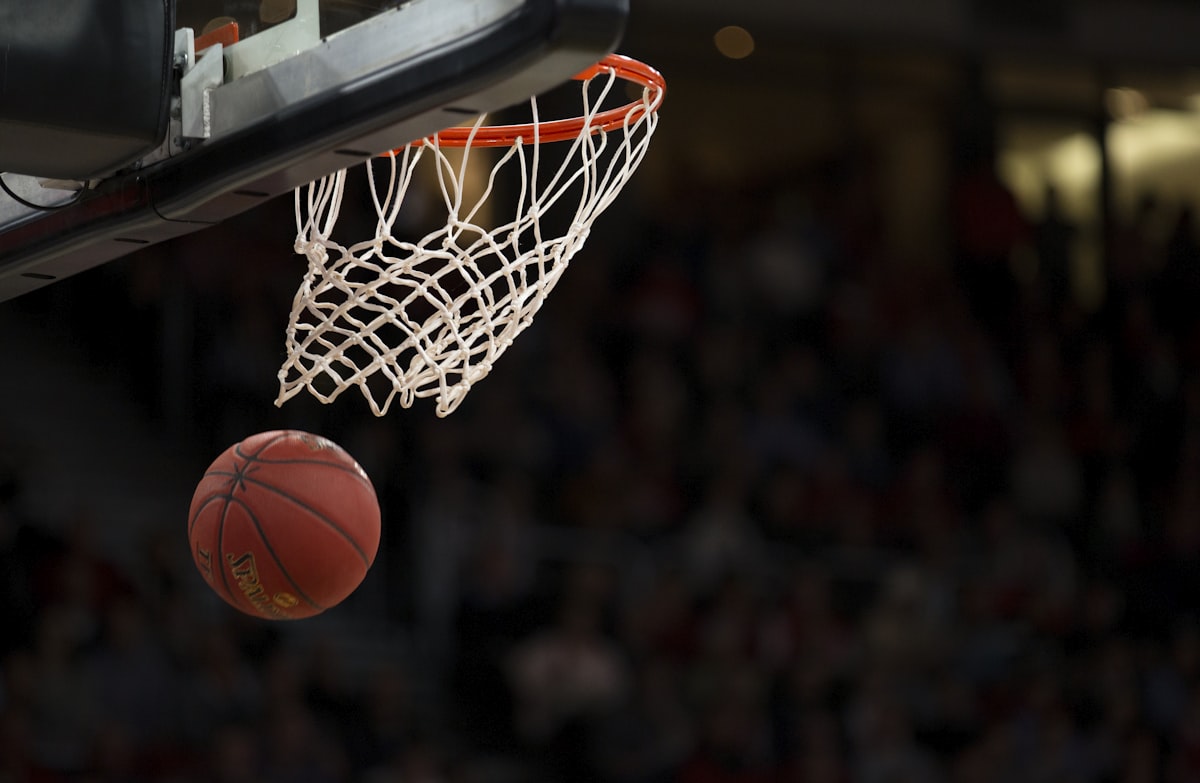
Basketball is one of the world’s most played and most watched sports — a fast, high-scoring game played by two teams of five on a rectangular court. The objective is simple: put the ball through the opponent’s hoop, which sits 3.05 metres (10 feet) above the floor, and stop the other team from doing the same. The team with more points when the clock hits zero wins.
For a beginner, the rules can feel overwhelming at first — shot clocks, violations, fouls, free throws, timeouts. But the game is actually built on a small set of core principles. Once you understand how scoring works, how the clock operates, and what counts as a foul or a violation, you can follow any game in the world, from a local park pickup match to an NBA Finals showdown. Here is everything you need to know.
The court and the equipment
An international (FIBA) basketball court is 28 metres long and 15 metres wide, while the NBA court is slightly larger at 28.65 by 15.24 metres. The key markings every beginner should recognise:
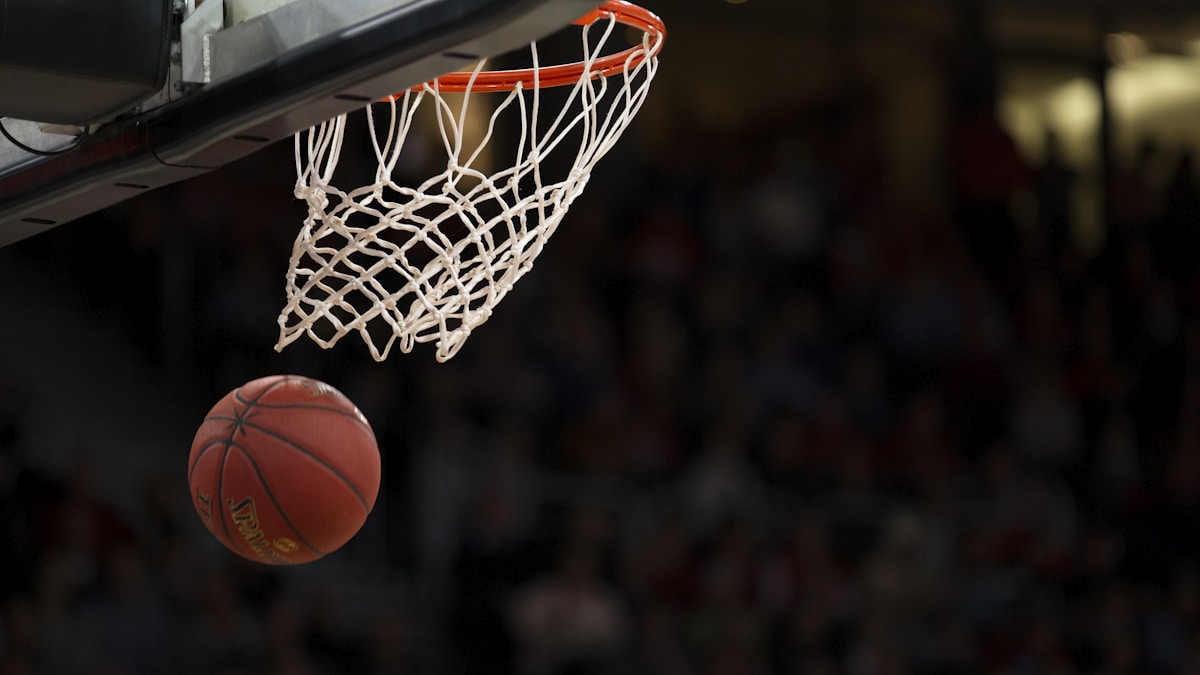
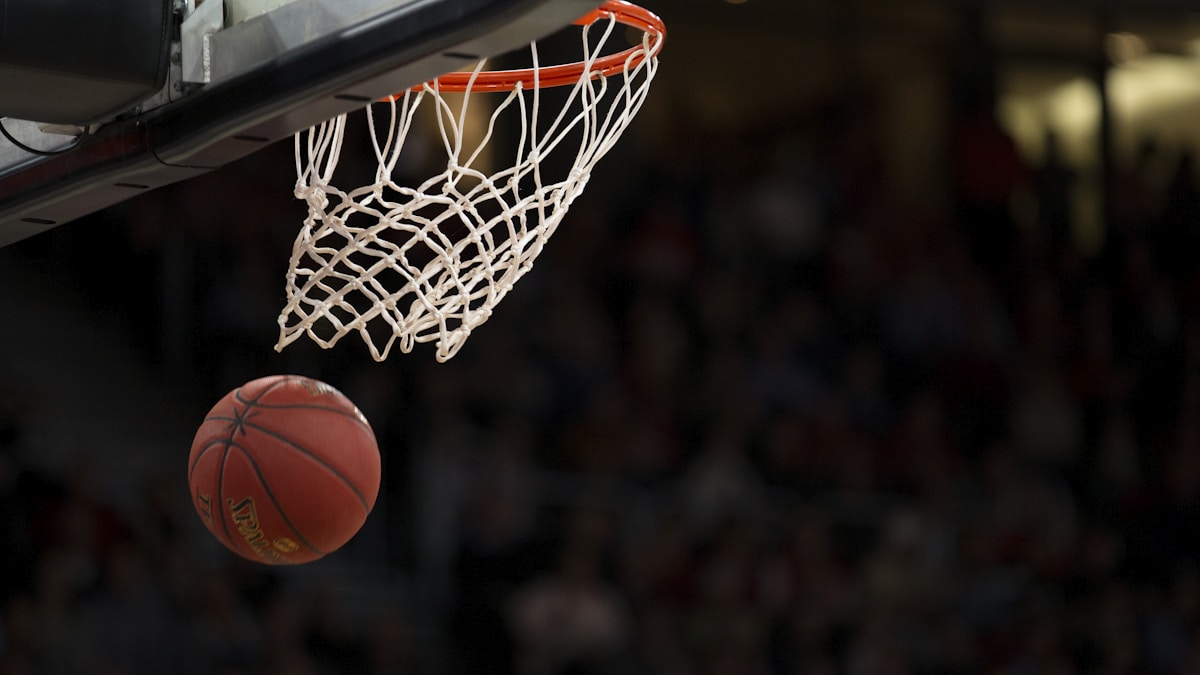
- The hoop (basket): a metal rim with a net, attached to a backboard, 3.05 metres above the floor — the same height at every level of the sport.
- The three-point line: an arc surrounding the hoop. Shots made from behind it are worth three points. It sits 6.75 metres from the basket in FIBA play and 7.24 metres in the NBA.
- The free-throw line: 4.6 metres (15 feet) from the backboard, where players take uncontested shots after certain fouls.
- The key (paint, lane): the rectangular area under the basket, 4.9 metres wide in FIBA play, where offensive players may not stay for more than three seconds.
- The centre circle: where the game begins with a jump ball.
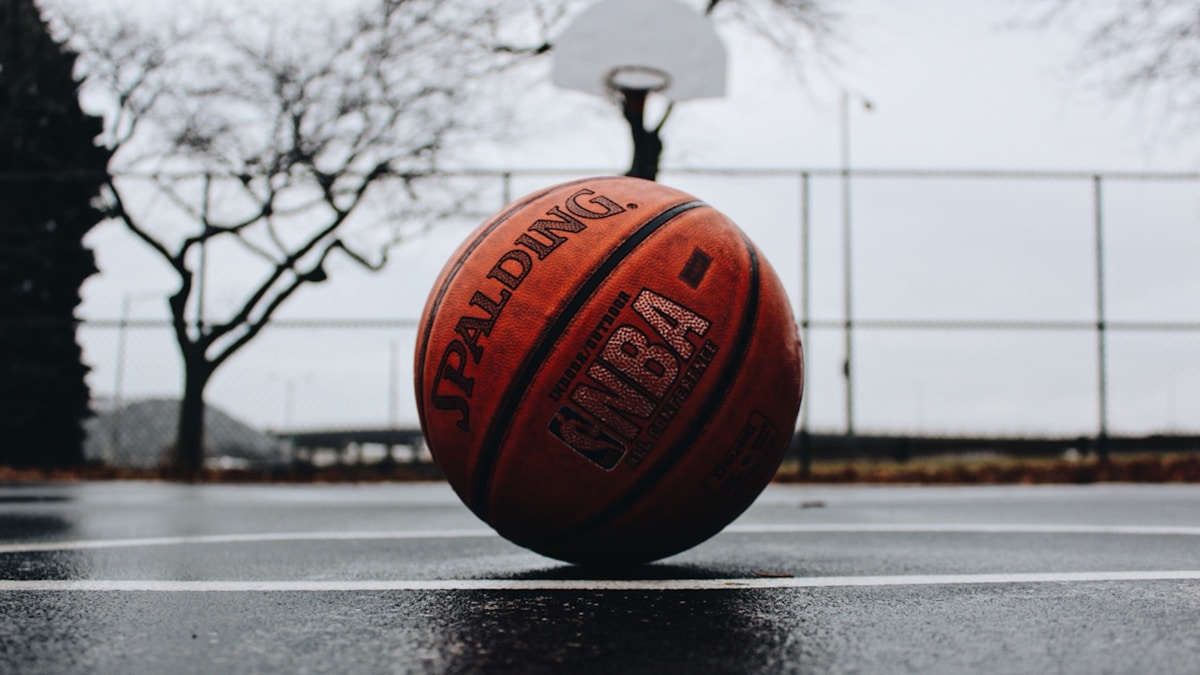
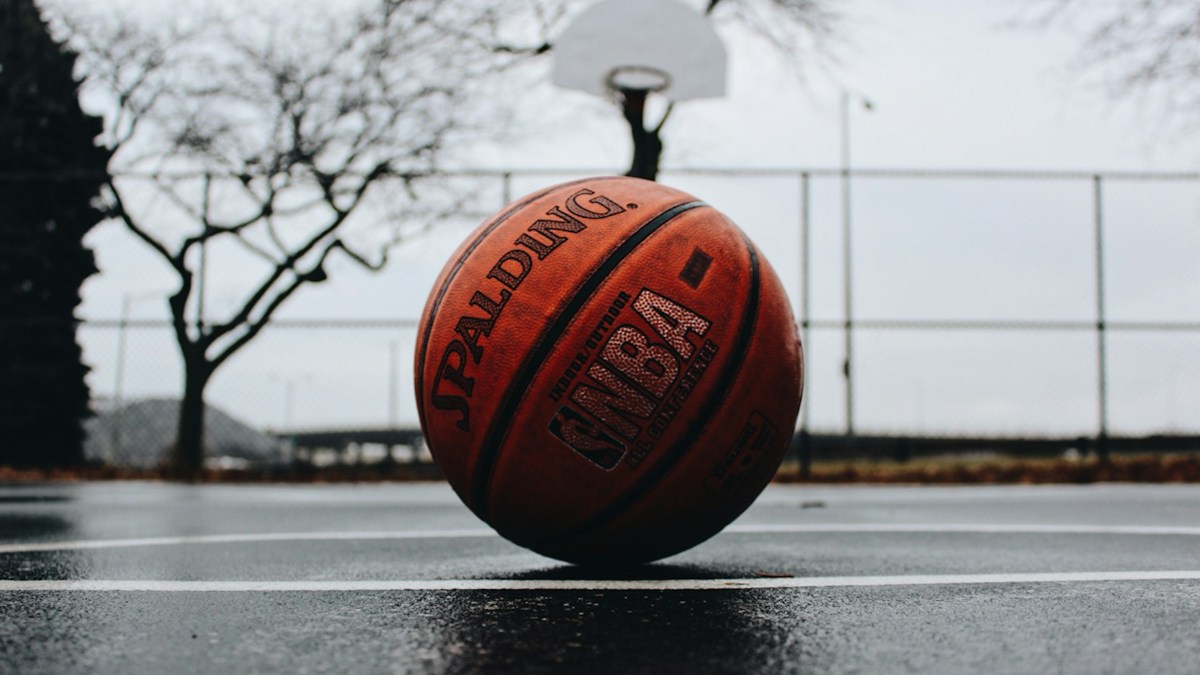
The ball itself is size 7 for men’s play — 74.9 to 78 centimetres in circumference and 567 to 650 grams — while women’s basketball uses a size 6 ball. Youth leagues use smaller balls and lower hoops to match players’ size.
How the game starts and how the clock works
A game begins with a jump ball at the centre circle: the referee tosses the ball up, and one player from each team leaps to tap it to a team-mate. After that, whenever the ball is tied up between two opponents, possession alternates between the teams rather than resetting with another jump.
Basketball is played in four quarters. In FIBA and most international competitions each quarter lasts 10 minutes; in the NBA and WNBA each quarter lasts 12 minutes. If the scores are level at the end of regulation, the teams play overtime periods of five minutes until one side is ahead when the buzzer sounds.
The clock stops for fouls, violations, timeouts, out-of-bounds plays and free throws — which is why a 48-minute NBA game takes around two and a half hours in real time. Each team also has a limited number of timeouts per game to rest players and set up plays.
How scoring works
Scoring in basketball comes in three ways:
- Field goal (2 points): any basket scored from inside the three-point line during open play.
- Three-pointer (3 points): a basket scored from behind the three-point arc.
- Free throw (1 point): an uncontested shot from the free-throw line, awarded after certain fouls.
A team can also earn “and one” opportunities: if a player is fouled while making a basket, the score counts and they receive one additional free throw. A foul on a missed three-point attempt awards three free throws, while a foul on a missed two-point attempt awards two.
Dribbling, passing and movement
Unlike many ball sports, a basketball player cannot run while holding the ball. A player in possession must dribble — bouncing the ball continuously with one hand — or pass it to a team-mate. Stop dribbling and you have established your “pivot foot”: you may step around on that foot, but you cannot drag it or lift it before releasing a pass or shot.
Break these rules and it is a turnover — possession goes to the other team. The most common violations beginners should know:
- Traveling (walking): taking more than the allowed steps while holding the ball without dribbling.
- Double dribble: dribbling with two hands, or stopping your dribble and starting again.
- Carrying (palming): turning your hand under the ball while dribbling to carry it.
- Out of bounds: the ball or a player in possession touching the floor or a surface outside the court lines.
- Kicked ball: deliberately kicking the ball — play stops and possession is awarded to the other team.
The shot clock and time limits
To keep the game moving, attacking teams must respect a series of deadlines. The most famous is the 24-second shot clock: a team must get a shot off that at least touches the rim before 24 seconds elapse. Miss the rim and it is a shot-clock violation and a turnover.
- 24 seconds: maximum time for a possession (resets to 14 seconds after an offensive rebound).
- 8 seconds: maximum time to move the ball from the backcourt across the halfway line.
- 5 seconds: maximum time to inbound the ball from the sideline or baseline.
- 3 seconds: offensive players may not stand in the key without making a move towards the basket.
The three-second rule is one of the most frequently misunderstood. In FIBA basketball the restriction applies to offensive players, who cannot camp in the paint waiting for a pass; in the NBA, defenders are also limited in how long they can stay in the key without guarding anyone.
Fouls and free throws
Basketball is a contact sport, but the rules draw a clear line between legal physical play and fouls. Illegal personal contact — hitting, pushing, holding, tripping or barging into an opponent — is a personal foul.
There are two important distinctions:
- Blocking vs charging: a defender who moves into the path of an offensive player already in the air is called for blocking; an offensive player who runs over a defender who has established a legal guarding position is called for charging (an offensive foul).
- Shooting fouls: fouling a player in the act of shooting awards free throws — two for a missed two-point attempt, three for a missed three-point attempt, plus the basket if it went in.
Individual players are limited in how many personal fouls they may commit. A player who reaches five fouls is disqualified in FIBA basketball; in the NBA the limit is six fouls. There are also technical fouls for unsportsmanlike conduct such as arguing with referees or delay of game — the opposing team receives a free throw — and flagrant fouls for excessive or dangerous contact, which can lead to ejection.
Team fouls matter too. Once a team exceeds its allowed number of fouls in a quarter (four in FIBA play and in the NBA), every subsequent non-shooting foul sends the fouled player to the free-throw line — the “bonus” situation. This is why late-game strategy so often revolves around foul management.
Goaltending and basket interference
Defenders cannot simply swat away any shot. Goaltending is called when a defender touches the ball while it is on its downward flight towards the hoop, or while it is over the rim. The result is harsh: the basket is awarded as if it had gone in. Offensive players are also barred from touching the ball while it is over the rim — a rule that prevents players from tapping in team-mates’ misses unfairly.
Players and positions
Each team fields five players at a time and can make unlimited substitutions, usually when play is stopped. The traditional positions are:
- Point guard: the playmaker who brings the ball up and organises the offence.
- Shooting guard: usually the best perimeter scorer and long-range shooter.
- Small forward: a versatile wing who scores and defends across the court.
- Power forward: a physical inside player who rebounds and scores close to the basket.
- Centre: usually the tallest player, anchoring defence around the rim and protecting the paint.
Modern basketball is far more fluid than these labels suggest — players switch positions constantly, and “positionless” line-ups are common at the highest level — but the five roles remain a useful map for beginners.
FIBA vs NBA: key differences
If you watch both international basketball and the NBA, you will notice a few rule differences. The game is the same, but the details vary:
- Quarter length: 10 minutes in FIBA, 12 minutes in the NBA.
- Three-point distance: 6.75 metres in FIBA, 7.24 metres in the NBA.
- Foul limit: five personal fouls to disqualify in FIBA, six in the NBA.
- Court size: the NBA court is slightly larger in both dimensions.
- Zone defence: allowed in both, though it was banned in the NBA until 2001.
Why basketball is great for beginners
Basketball is one of the easiest sports to start playing: all you need is a ball and a hoop, and the fundamental skills — dribbling, passing, shooting — can be practised alone. It is also an excellent full-body workout, combining sprinting, jumping and lateral movement, which is why it burns so many calories in a short time.
For beginners looking to improve quickly, focus on the basics: learn to dribble without looking at the ball, practise your free-throw routine, and always box out for rebounds. Watch a few professional games with the rulebook in mind and the game will click faster than you expect.
Key takeaways
- Basketball is played five-a-side, with the hoop at 3.05 metres and the objective simply to outscore the opponent.
- Baskets are worth two points inside the arc, three points outside it, and one point from the free-throw line.
- Games run in four quarters (10 minutes in FIBA, 12 in the NBA), with five-minute overtime periods if needed.
- Teams face a 24-second shot clock, plus 8-, 5- and 3-second limits on backcourt, inbounding and the key.
- Traveling, double dribbling and goaltending are the violations beginners most often see called.
- Players foul out at five fouls in FIBA play and six in the NBA; team fouls trigger bonus free throws.